

Request a Demo

CLOUSYS · CONNECTED PROFESSIONAL SERVICES

Applicant Tracking System (ATS)

Connect recruiting to the skills, timing and capacity your delivery teams actually need.
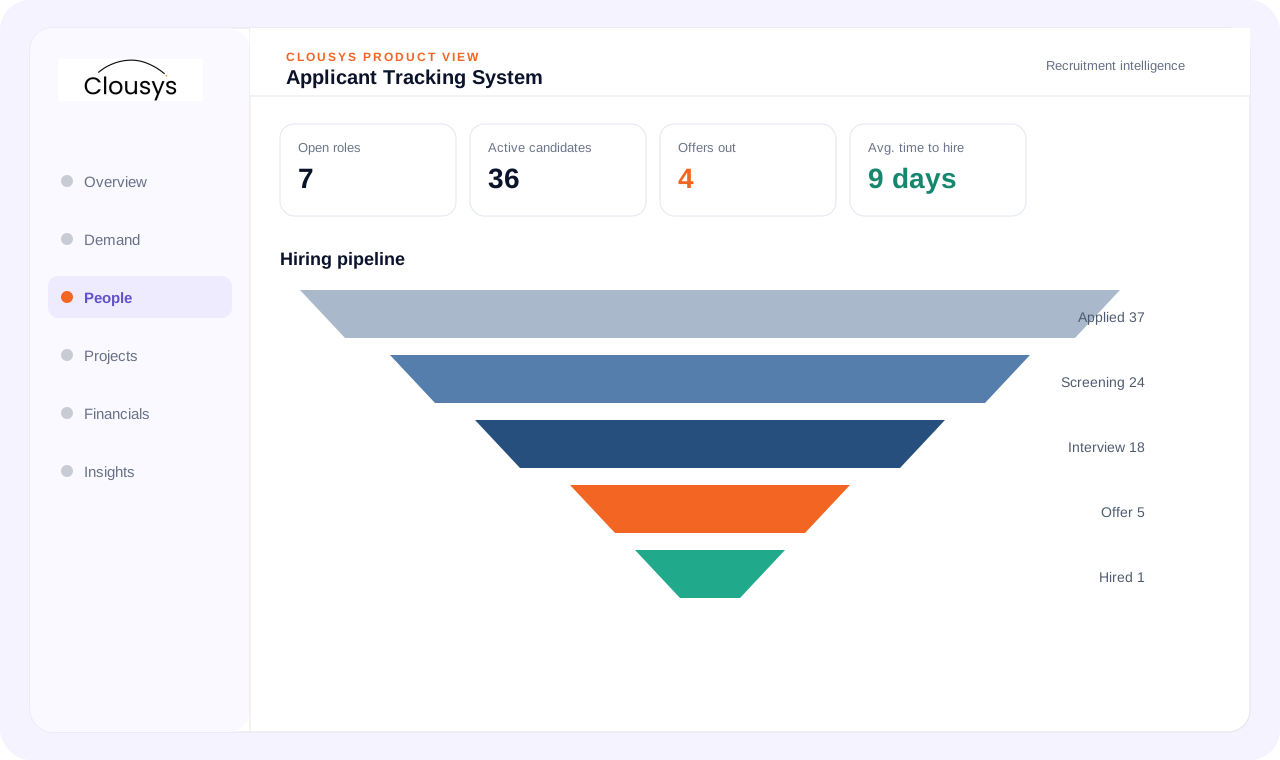
Applicant Tracking System interface illustration
Illustrative product view · sample data, not a performance claim

THE DECISION THIS SUPPORTS

Hire for a delivery requirement, not just an open position.

A project needs a specialist before its start date. Carry that requirement from requisition approval through candidate evaluation, offer acceptance and joining readiness.

01

Start with the work that needs to be staffed

A requisition is more useful when it carries the delivery requirement behind it. Give recruiters the role, timing and commercial context, and route the decision through the right approvers before the position opens.
Explore the capabilities
  • Job requisition creation
  • Multi-level requisition approval
  • Position management
  • Hiring manager assignment
  • Job description management
  • Skills and experience requirements
  • Number of openings
  • Hiring priority
  • Target joining dates
  • Budget/rate information
  • Job publishing
  • Open/hold/closed positions
  • Demand originating from Resource Management
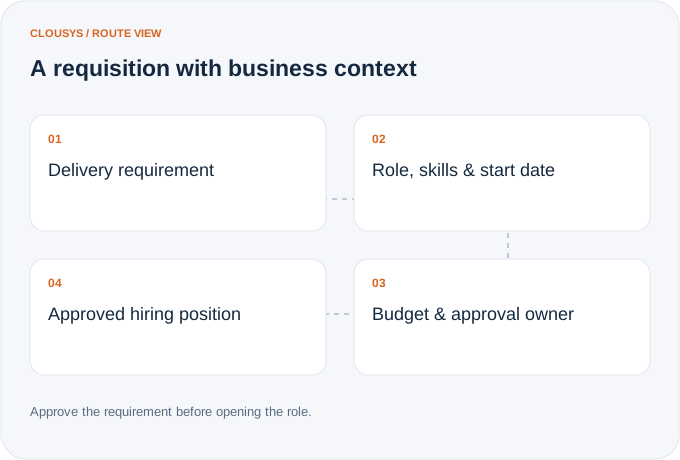
A requisition with business context: Delivery requirement; Role, skills & start date; Budget & approval owner; Approved hiring position

Illustrative workflow · capability relationships

02

Build a candidate record that survives the next application

A promising candidate may suit more than one role. Keep the profile, application history and source together so recruiters can revisit the relationship without creating another disconnected record.
Explore the capabilities
  • Candidate 360
  • Resume parsing
  • Candidate database
  • Talent pool
  • Candidate source tracking
  • Duplicate candidate identification
  • Skills extraction
  • Experience history
  • Candidate-to-job association
  • Multiple applications
  • Candidate pipeline
  • Candidate status history
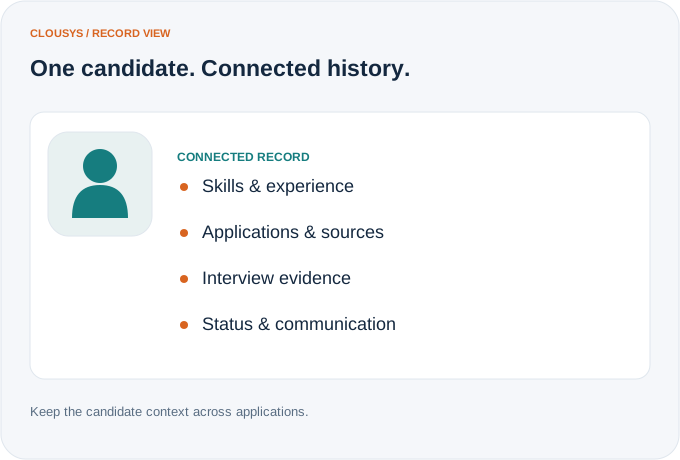
One candidate. Connected history.: Skills & experience; Applications & sources; Interview evidence; Status & communication

Illustrative workflow · capability relationships

03

Use AI to support a more informed shortlist

Bring the evidence behind a match into the recruiter’s review. Summaries and suggested candidates can help focus attention, while missing skills and interview context remain visible to the people making the hiring decision.
Explore the capabilities
  • Resume-to-JD matching
  • Candidate ranking
  • Skills identification
  • Candidate summaries
  • Missing-skill identification
  • Suggested candidates
  • Interview-summary assistance
  • Candidate search using natural language
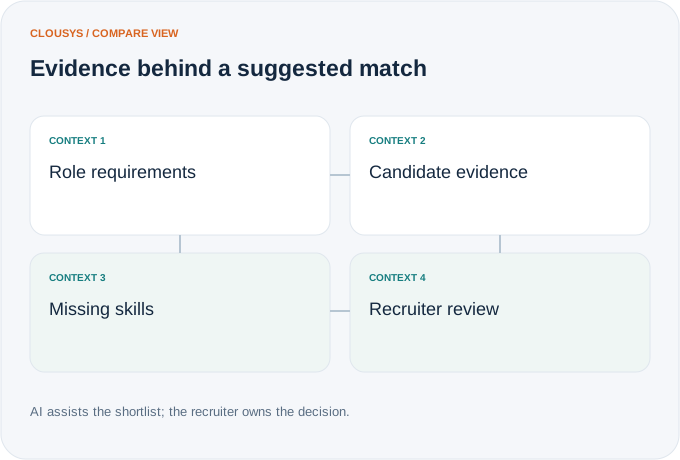
Evidence behind a suggested match: Role requirements; Candidate evidence; Missing skills; Recruiter review

Illustrative workflow · capability relationships

SEE IT IN CONTEXT

Explore this workflow with your team’s priorities.

Book a focused walkthrough
04

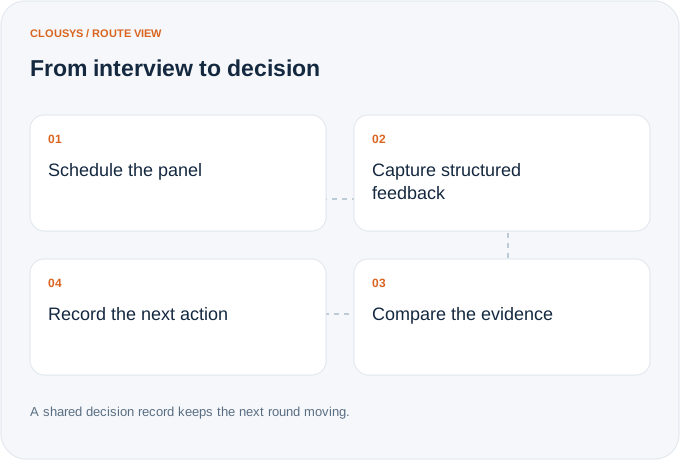
Move interviews forward with a shared decision record

An interview is not complete when the meeting ends. Coordinate panels and rounds, collect structured feedback, and keep the selection decision and candidate communication connected to the application.
Explore the capabilities
  • Candidate screening
  • Shortlisting
  • Interview scheduling
  • Multiple interview rounds
  • Interview panel management
  • Interviewer notifications
  • Structured feedback
  • Rating/scorecards
  • Interview recommendations
  • Selection/rejection
  • Candidate communication
From interview to decision: Schedule the panel; Capture structured feedback; Compare the evidence; Record the next action

Illustrative workflow · capability relationships

05

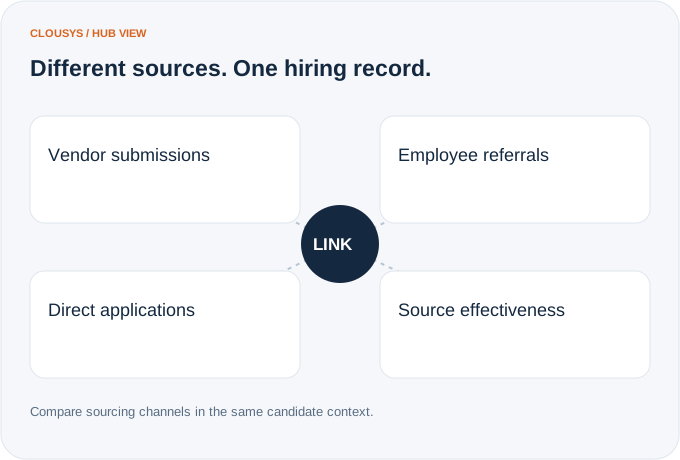
Bring partners and referrals into the same hiring flow

Share the requirement with recruiting partners and track what each source contributes. A common submission trail helps teams understand which channels produce suitable candidates and where follow-up is needed.
Explore the capabilities
  • Vendor portal
  • Demand sharing
  • Vendor candidate submission
  • Employee referrals
  • Candidate-source effectiveness
  • Vendor submission tracking
Different sources. One hiring record.: Vendor submissions; Employee referrals; Direct applications; Source effectiveness

Illustrative workflow · capability relationships

06

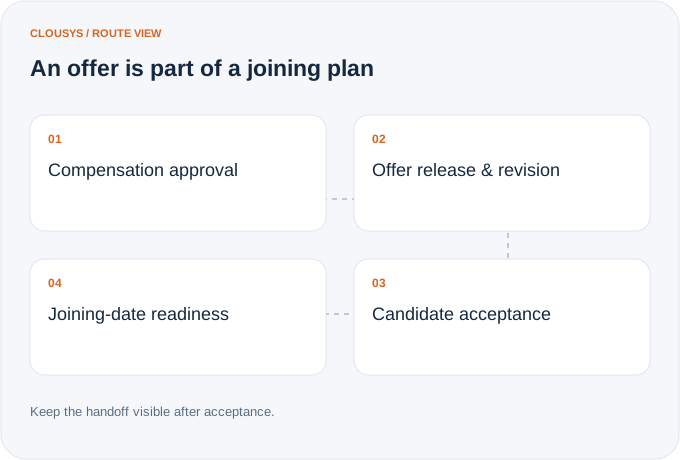
Keep the offer connected to the joining plan

An accepted offer is an important milestone, but it is not the end of the hiring process. Keep compensation, approvals, revisions and responses together so the team can track the path from offer to joining.
Explore the capabilities
  • Compensation information
  • Offer approval
  • Offer templates
  • Offer generation
  • Offer release
  • Offer revision
  • Negotiation tracking
  • Offer acceptance/rejection
  • Offer-to-join tracking
  • Dropout tracking
An offer is part of a joining plan: Compensation approval; Offer release & revision; Candidate acceptance; Joining-date readiness

Illustrative workflow · capability relationships

07

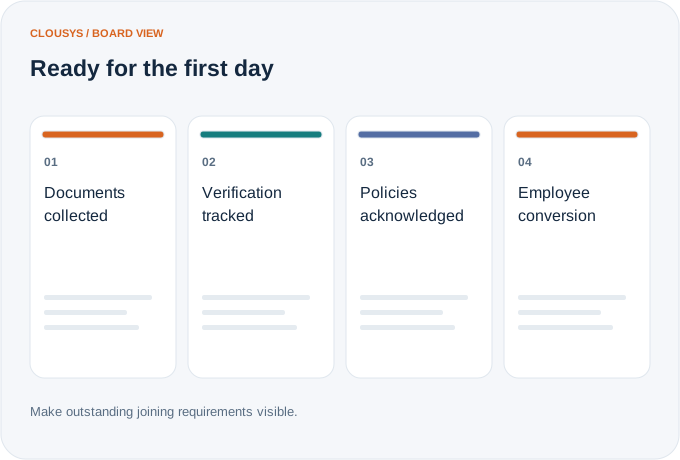
Turn acceptance into a ready-to-join employee

Before day one, make the remaining documents, verification and acknowledgements visible. Carry the candidate record into employment so HR receives the context already collected during hiring.
Explore the capabilities
  • Candidate portal
  • Document collection
  • Document checklist
  • Document verification
  • BGV tracking
  • Joining forms
  • Policy acknowledgement
  • Joining-date management
  • Pre-joining communication
  • Joining readiness
  • Candidate-to-employee conversion
Ready for the first day: Documents collected; Verification tracked; Policies acknowledged; Employee conversion

Illustrative workflow · capability relationships

PRACTICAL QUESTIONS

Questions about applicant tracking system.

How does recruitment connect to delivery demand?

Start with the role, required skills and expected start date. Linking the requisition to the business requirement gives recruiters the context to prioritize a vacancy and gives delivery teams visibility into joining readiness.

What should we measure beyond applicant volume?

Track movement through screening, interviews, offers and joining. Use consistent stage definitions and review time spent waiting. A large candidate pool does not resolve a skills gap if the required person cannot join when the project starts.

Where does recruitment end and the employee lifecycle begin?

The handoff should carry the accepted offer, joining date and required documentation into the employee record. Confirm which data transfers, who approves it and what remains outstanding before treating the person as available for assignment.

Discuss your requirements ↗
THE LATEST FROM CLOUSYS

Ideas for your next operating decision.

View all insights →