

From Pipeline to Capacity: Building a Connected Demand Forecast
Translate likely opportunities into dated skill requirements without treating every possible deal as a confirmed assignment.
Read article →CLOUSYS · CONNECTED PROFESSIONAL SERVICES
Bring external talent supply into a governed demand, delivery and commercial workflow.
THE DECISION THIS SUPPORTS
A specialist role needs support from a recruitment partner. Share a clear requirement, retain source history and review candidate progress without losing accountability between teams.
Maintain the information needed to work with each recruitment or staffing partner.
Define who owns the relationship and what services the partner supplies. Keep operational contact information connected to the demand workflow so teams know where to resolve a question.
Give partners consistent requirements, dates and submission expectations.
Distinguish confirmed requests from speculative demand. Clear requirements reduce unsuitable submissions and make partner responses easier to assess against the same need.
Track partner submissions against the originating requirement.
Keep candidate status visible to the authorized internal team and agree a method for handling duplicate profiles. Submission volume alone should not substitute for an assessment of fit and progress.
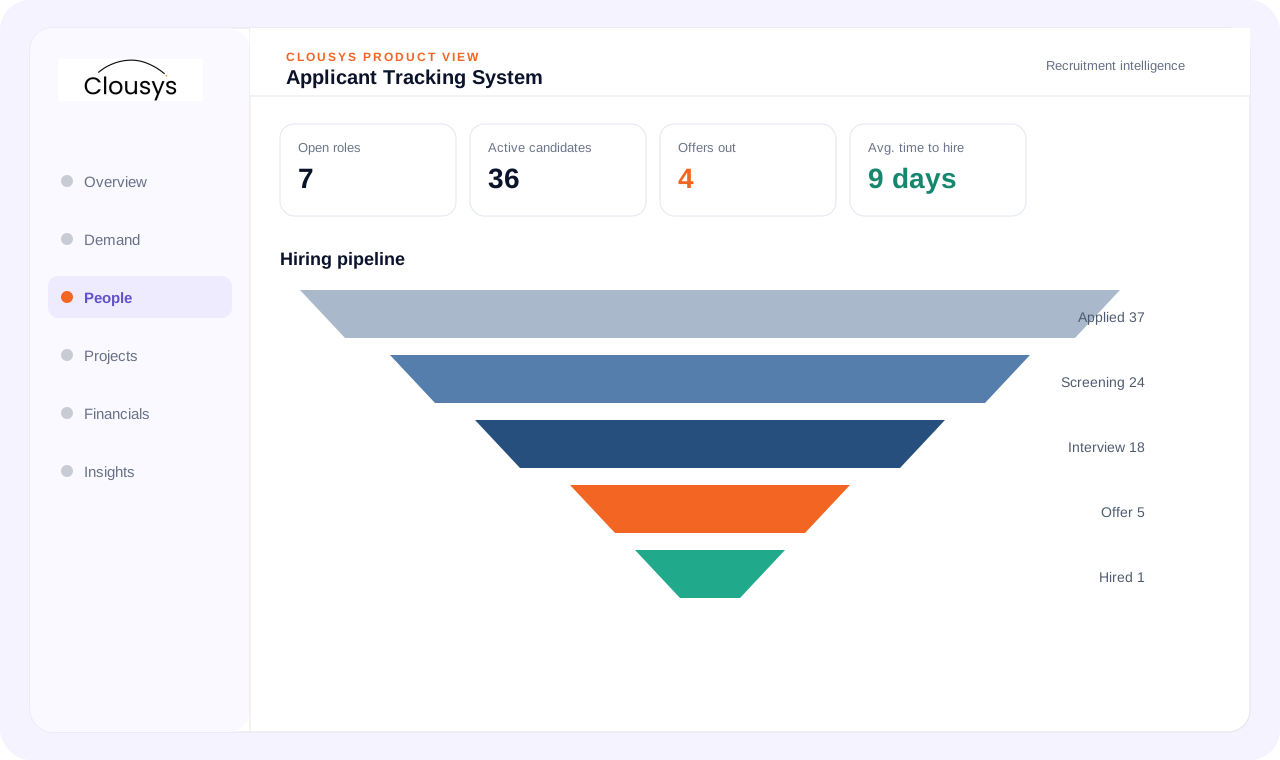
Connect screening and interview activity to the partner-sourced candidate.
Define who communicates decisions and what feedback can be shared. Clear handoffs avoid leaving the partner and recruiter with different understandings of a candidate’s progress.
Retain the relevant rate and commercial context for external talent.
Review proposed assignments against the approved terms before deployment. Clarify how changes are authorized so delivery decisions do not create unexpected cost or billing issues.
Confirm the required information and approvals before treating external talent as available project capacity.
Connect the planned start date to delivery ownership. A selected candidate who is not ready to join should remain visible as a staffing dependency.
Link deployed capacity to the work and time supporting financial review.
Define the boundary between partner invoicing and client billing. Reconciliation is easier when project identifiers and approved work are preserved across the handoff.
Review responsiveness, candidate progression and delivery readiness together.
Compare partners against comparable requirements and time periods. Use the review to improve the quality of the supply relationship rather than rewarding the largest number of submissions.
WORKFLOW DESIGN
Start with one vendor management workflow. Agree the source records, accountable owners and approval rules before expanding the scope.
PRACTICAL QUESTIONS
Give the partner a clear role, skill requirement, start date and commercial context. This allows submitted candidates or capacity to be compared against the same business need.
Keep assignment, delivered work, approval and agreed terms connected. Resolve discrepancies with the accountable owner before treating the work as ready for financial processing.
Review response time, requirement fit, joining reliability and approval exceptions using consistent definitions. Volume alone does not show whether a partner is helping delivery meet its commitments.

Translate likely opportunities into dated skill requirements without treating every possible deal as a confirmed assignment.
Read article →

Review scope changes, excess effort, staffing mix, rate exceptions, idle capacity, late records and billing delays together.
Read article →

Give leaders a traceable view of capacity, delivery and financial risk, with clear distinctions between facts and estimates.
Read article →

Evaluate a resource recommendation against experience, delivery context and the constraints a skills score cannot explain.
Read article →