

Request a Demo

CLOUSYS · CONNECTED PROFESSIONAL SERVICES

Professional Services Delivery

Keep milestone confidence, team workload, risk and effort in the same delivery conversation.
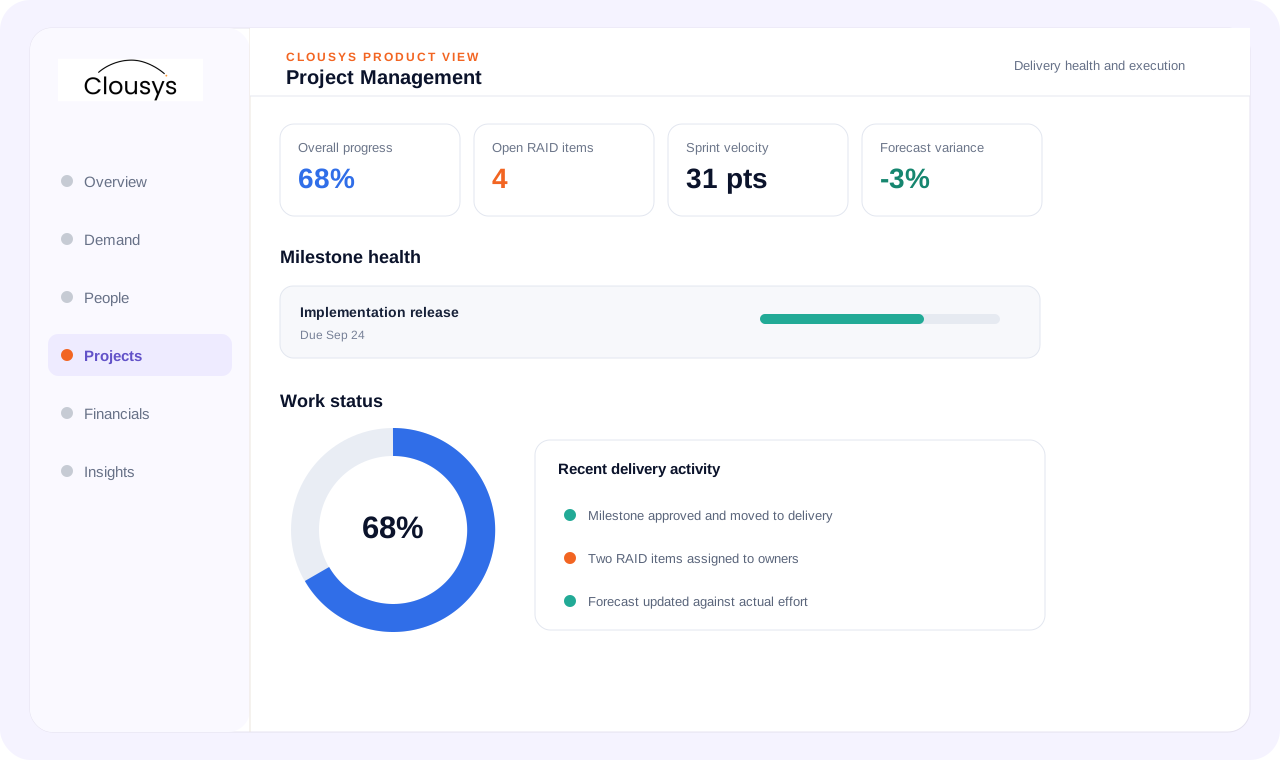
Project Management and Delivery interface illustration
Illustrative product view · sample data, not a performance claim

THE DECISION THIS SUPPORTS

Manage the engagement and its commercial consequences.

A milestone moves and the team needs additional effort. Review the dependency, revised plan and resource impact alongside budget and target margin before accepting the change.

01

Carry the commercial promise into project setup

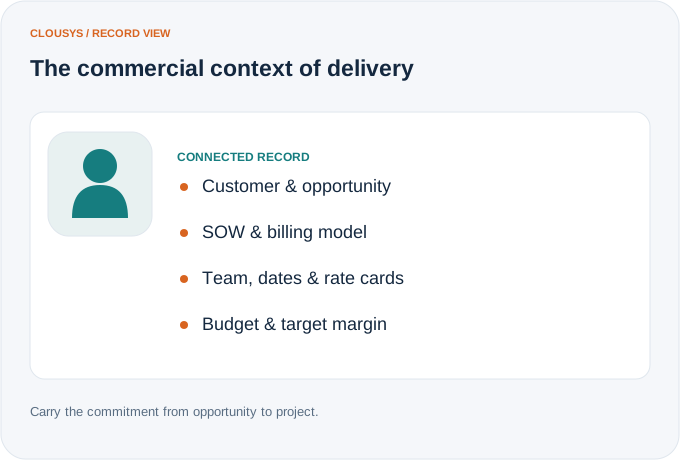
Delivery starts with a commitment made to the customer. Preserve the opportunity, contract and billing context when establishing the project, its owners and its financial baseline.
Explore the capabilities
  • Project creation from CRM
  • Customer/account
  • Opportunity linkage
  • SOW/contract reference
  • Project hierarchy
  • Project manager
  • Delivery manager
  • Project team
  • Billing model
  • Rate cards
  • Project dates
  • Budget
  • Revenue
  • Cost
  • Target margin
The commercial context of delivery: Customer & opportunity; SOW & billing model; Team, dates & rate cards; Budget & target margin

Illustrative workflow · capability relationships

02

Build a plan that connects work, people and budget

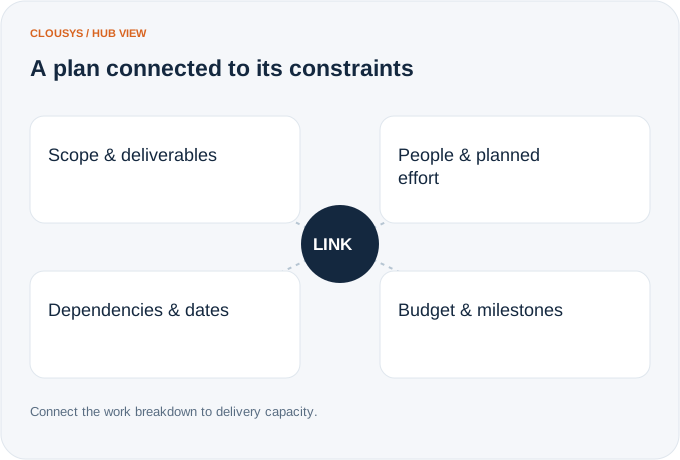
Break the commitment into deliverables and the work needed to achieve them. Align estimates, resource requirements and dependencies with milestones so the schedule has an operating basis.
Explore the capabilities
  • Epics
  • Features
  • User stories
  • Tasks
  • Milestones
  • Releases
  • Deliverables
  • Dependencies
  • Resource planning
  • Effort estimation
  • Planned hours
  • Budgeted hours
  • Project schedule
A plan connected to its constraints: Scope & deliverables; People & planned effort; Dependencies & dates; Budget & milestones

Illustrative workflow · capability relationships

03

Keep execution close to the delivery commitment

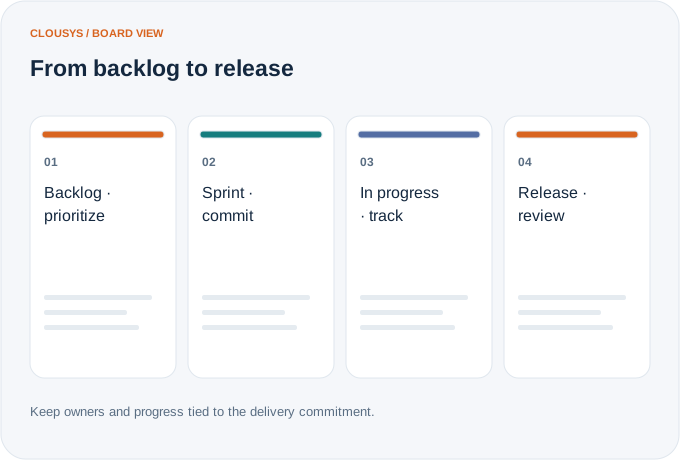
Use the backlog and sprint flow to organize work without losing the project context. Make ownership, progress and release readiness visible as teams move from planned work to delivered outcomes.
Explore the capabilities
  • Backlog
  • Epics
  • User stories
  • Tasks
  • Sprint planning
  • Sprint execution
  • Story points
  • Status
  • Assignee
  • Work progress
  • Release tracking
From backlog to release: Backlog · prioritize; Sprint · commit; In progress · track; Release · review

Illustrative workflow · capability relationships

SEE IT IN CONTEXT

Explore this workflow with your team’s priorities.

Book a focused walkthrough
04

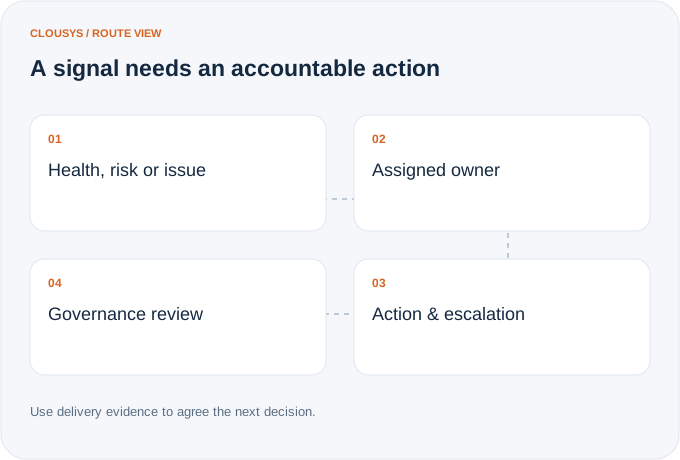
Turn delivery signals into accountable action

A status color is a starting point for a conversation. Connect project health with the risks, issues and decisions behind it, and carry the same record into internal and customer governance.
Explore the capabilities
  • Project health
  • RAG status
  • Risks
  • Issues
  • Dependencies
  • Actions
  • Milestones
  • Deliverables
  • Escalations
  • Change requests
  • Project status reports
  • MBR/QBR
  • Customer governance
A signal needs an accountable action: Health, risk or issue; Assigned owner; Action & escalation; Governance review

Illustrative workflow · capability relationships

05

Understand the financial impact of every project, resource and hour

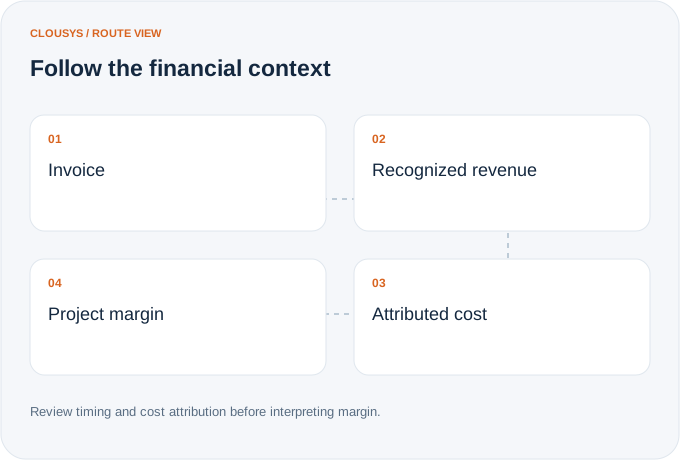
Read the invoice, revenue and cost context together to understand project margin. Delivery progress and financial performance need a connected review, so changes in staffing, effort or commercial assumptions can be discussed while action is still possible.
Explore the capabilities
  • Invoice → Revenue → Cost → Margin
  • Budget
  • Revenue
  • Cost
  • Target margin
  • Billing model
  • Rate cards
  • Planned hours
  • Budgeted hours
Follow the financial context: Invoice; Recognized revenue; Attributed cost; Project margin

Illustrative workflow · capability relationships

PRACTICAL QUESTIONS

Questions about project management system.

How do milestones connect to project economics?

Milestone progress explains delivery commitments; effort and commercial terms explain financial exposure. Reviewing them together helps a project manager identify when a schedule change also affects cost, billing readiness or margin.

What belongs in a project risk review?

Separate risks from current issues, and record the owner and next action. Include dependencies that affect staffing, acceptance or invoicing. The review should lead to a decision rather than another status document.

How should we compare forecast and actual effort?

Use a consistent work breakdown and reporting period. Review remaining effort alongside time already recorded, then explain material changes to the estimate. Progress percentage alone does not establish whether the project remains within its planned effort.

Discuss your requirements ↗
THE LATEST FROM CLOUSYS

Ideas for your next operating decision.

View all insights →