

From Pipeline to Capacity: Building a Connected Demand Forecast
Translate likely opportunities into dated skill requirements without treating every possible deal as a confirmed assignment.
Read article →CLOUSYS · CONNECTED PROFESSIONAL SERVICES
Connect recorded work and employee availability to delivery, utilization and billing.
THE DECISION THIS SUPPORTS
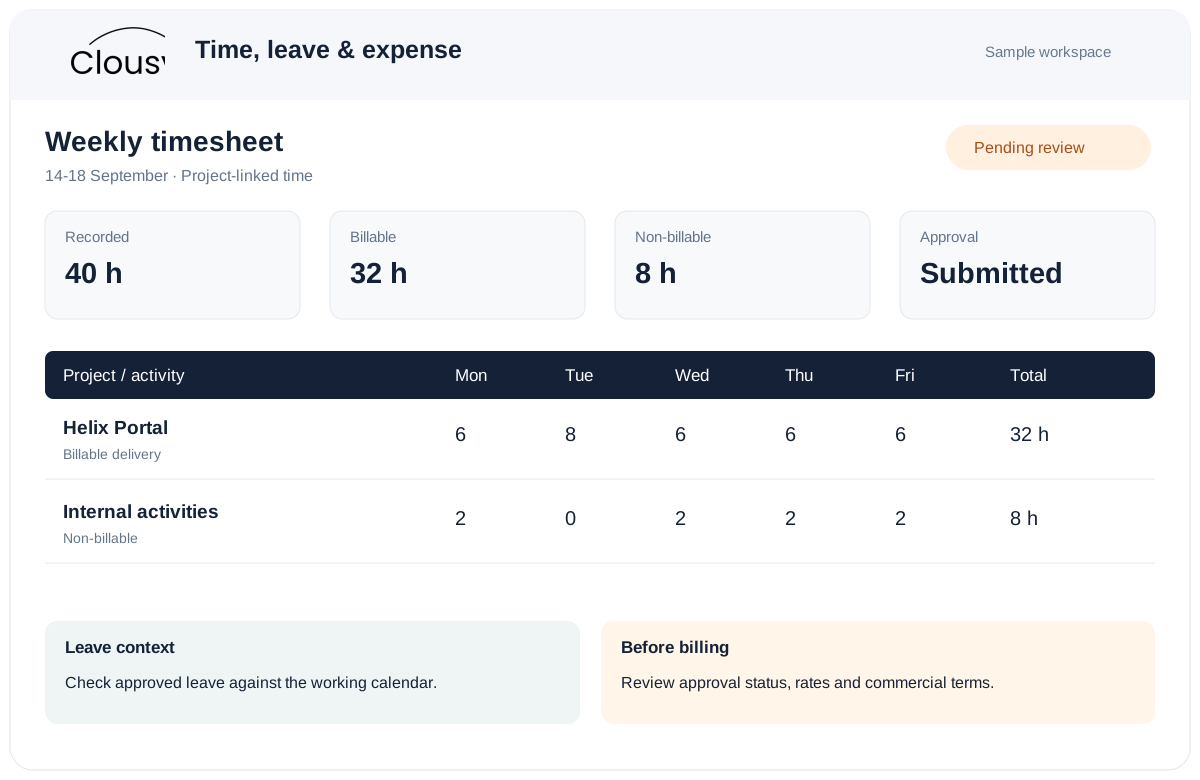
A consultant submits project time and an expense. Review the project context, approval state and exceptions before those records are used for billing or financial reporting.
Capture work against the relevant project and activity so it can support delivery and finance decisions.
Agree the reporting period and required level of detail. Time data should explain effort without imposing unnecessary complexity on the people recording it.
Make the submission cadence and owner clear.
Review missing or late timesheets before they delay approvals and billing. A reminder is useful when it gives the person a clear outstanding action, rather than repeating a generic request to the whole team.
Give approvers enough project and activity context to assess submitted work.
Separate submission from approval and record the reason when a correction is needed. Finance should be able to distinguish time awaiting review from time approved for the next billing step.
Keep billable, internal and other non-billable work distinguishable.
Agree classifications with delivery and finance so utilization reporting does not change depending on which team produces it. Review exceptions against the engagement’s commercial rules.
Connect planned leave to the capacity horizon.
A project allocation should reflect when a team member is actually available. This lets delivery managers adjust work sequencing before leave becomes an unexpected staffing gap.
Associate expenses with the appropriate project and approval process.
Clarify which costs are recoverable under the engagement terms and which affect internal delivery economics. Finance needs evidence and classification before using a claim in billing or margin reporting.
Move approved work into the billing-readiness review with the required commercial context.
Flag missing rates or other exceptions rather than silently treating every approved hour as invoice-ready. Clear states make the remaining work visible to finance.
Use approved time to compare actual effort against the plan.
Inspect variance by project and reporting period before drawing conclusions. Utilization becomes more meaningful when leaders understand its denominator and the mix of billable and non-billable activity.
WORKFLOW DESIGN
Start with one time, leave & expense workflow. Agree the source records, accountable owners and approval rules before expanding the scope.
PRACTICAL QUESTIONS
Submitted time has been recorded and sent for review. Approved time has passed the required review. Keep corrections and approval status visible so finance can distinguish work awaiting a decision from work ready for the next billing check.
Approved leave reduces the capacity available for assignments during the relevant period. Compare planned work with the employee’s working calendar before interpreting an apparent resource gap or over-allocation.
No. Classify work using the engagement and activity rules. Internal work, non-billable tasks and billable delivery should remain distinguishable; recorded time alone does not determine what can be invoiced.

Translate likely opportunities into dated skill requirements without treating every possible deal as a confirmed assignment.
Read article →

Review scope changes, excess effort, staffing mix, rate exceptions, idle capacity, late records and billing delays together.
Read article →

Give leaders a traceable view of capacity, delivery and financial risk, with clear distinctions between facts and estimates.
Read article →

Evaluate a resource recommendation against experience, delivery context and the constraints a skills score cannot explain.
Read article →